
Foundation Repair in Charleswood
Large lots and two distinct housing generations, on the same Lake Agassiz clay as the rest of the city.
Charleswood was a farming community carved out of dense aspen and oak forest along the Assiniboine River in the late 1800s, and it stayed rural far longer than most of what is now Winnipeg. Winnipeg Foundation Experts works throughout the district.
From Farms to Suburb
It was incorporated as a Rural Municipality on 15 February 1913 and remained independent until amalgamating into Winnipeg on 1 January 1972 as part of the Unicity reform, one of twelve municipalities merged that day.
The growth is striking: 450 residents in 1901 to 12,180 by 1971. Before that, the local economy ran on dairy, poultry, market gardens and mink ranching.
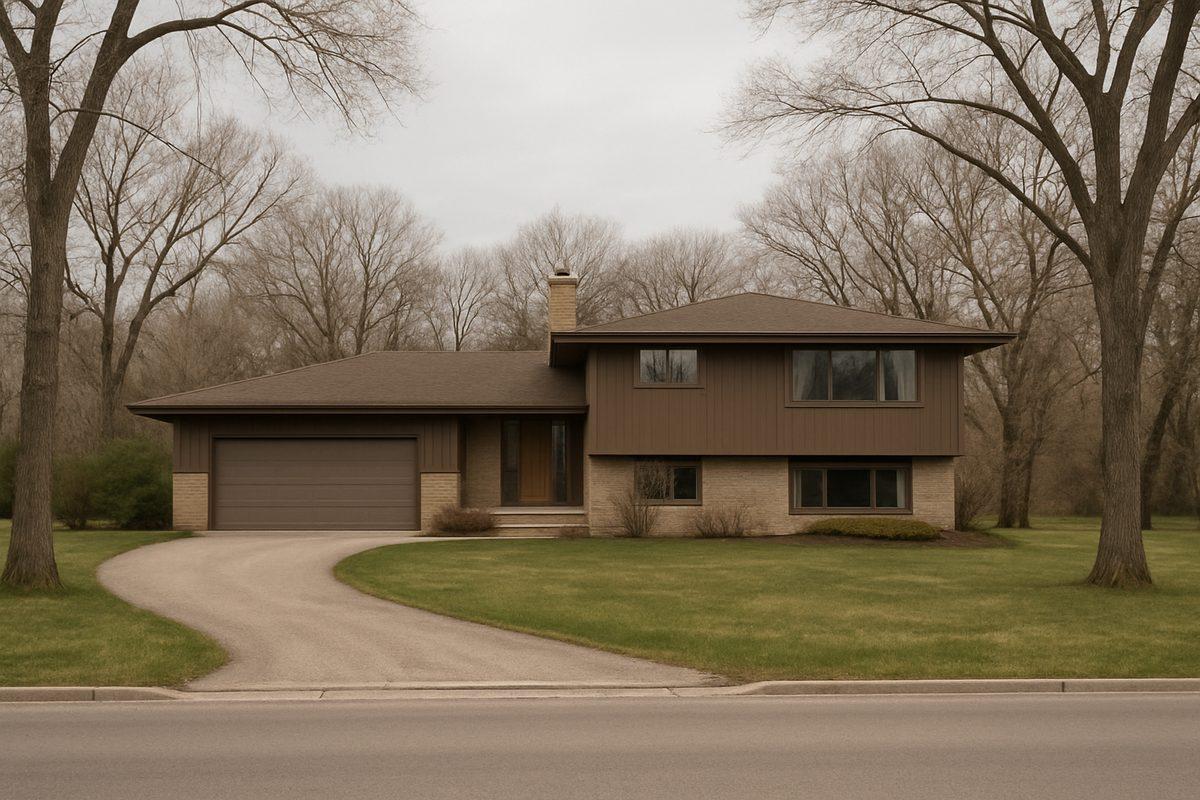
Two housing generations dominate. The 1930s to 1950s produced modest farmhouse-style bungalows on larger lots, with fieldstone or poured concrete foundations. The 1960s and 1970s brought raised bungalows and side-splits on generous lots, poured concrete foundations, which is the most common housing type in the district today. At least 7,500 homes went up during the 1970s alone.
Roblin Park was developed after the Second World War with Veterans’ Land Act funding, which provided loans of up to $6,000 to veterans building their own homes. Varsity View, extending south of Roblin Boulevard between William R. Clement Parkway and the Assiniboine Forest, was among the earliest post-war subdivisions.
What We Will Not Tell You About the Soil
There is a persistent local belief that Charleswood sits on better-draining sandy or ridge soil. We looked specifically for a source that says so, and could not find one. Lake Agassiz did leave ridges with better drainage across the wider region, but nothing we could verify identifies Charleswood by name as having soil different from the rest of the city.
Everything sourceable puts this district on the same silty clay, the local gumbo deposited during the Emerson phase between roughly 10,000 and 9,200 years ago, expanding when wet and shrinking in drought.
So we assess your property rather than assuming a district-wide advantage that may not exist. If your lot does drain unusually well, that will be apparent on site.
Large Lots Are an Advantage
The generous lot sizes here give you room that narrower properties do not. Grade can be established properly away from the wall, and downspouts can discharge well clear of the foundation instead of into a side yard a metre wide.
Those two measures are the cheapest foundation protection available, and Charleswood properties are unusually well placed to use them.
The counterweight is tree cover. Charleswood contains the Assiniboine Forest, at 700 acres the largest remaining urban forest in Canada, with old-growth aspen and oak, wetlands, tall-grass prairie and 18 kilometres of trails including the Harte Trail. Mature trees close to a house draw substantial moisture from clay through a dry summer.
Around the District
Roblin Boulevard forms the northern boundary along the Assiniboine, with Shaftesbury Boulevard to the east. In the early nineteenth century the area held “The Passage,” a natural ford at the foot of Berkley Street used by buffalo hunters and traders crossing the river.
We work across Varsity View, Roblin Park, Ridgewood South, Westdale and the rest. The assessment is free. Common work here: basement waterproofing, foundation crack repair, and crawl space repair, which is more common in this district than in the older city stock.
Neighbourhoods We Serve in Charleswood
- Varsity View
- Roblin Park
- Ridgewood South
- Westdale
- Elmhurst
- Vialoux
- Southboine
- Wilkes South
Our Services in Charleswood
- Foundation Inspection in Charleswood
- Foundation Crack Repair in Charleswood
- Basement Waterproofing in Charleswood
- Sump Pump Installation in Charleswood
- Sump Pump Repair & Replacement in Charleswood
- Weeping Tile Installation in Charleswood
- Egress Window Installation in Charleswood
- Foundation Piling & Underpinning in Charleswood
- Bowing & Bulging Wall Repair in Charleswood
- House Leveling & Settlement in Charleswood
- Wet Basement & Leak Repair in Charleswood
- Parging & Foundation Resurfacing in Charleswood
- Concrete Repair in Charleswood
- Window Wells in Charleswood
- Crawl Space Repair in Charleswood
- Basement Lowering in Charleswood
Foundation Questions from Charleswood Homeowners
Is Charleswood soil different from the rest of Winnipeg?
We are careful about this one. There is a widely repeated belief that Charleswood sits on sandier, better-draining ridge soil than the rest of the city. We could not find a credible source that identifies Charleswood specifically as having different soil, and everything we could verify puts it on the same Lake Agassiz silty clay as the rest of Winnipeg. We would rather tell you that than repeat something we cannot stand behind.
What difference do the large lots make?
Mostly a helpful one. Generous lots give you room to establish proper grade away from the foundation and to run downspout discharge well clear of the house, which are two of the cheapest and most effective things you can do. On a narrow lot those options are constrained. The trade-off is more mature trees, which draw moisture out of clay.
My house is a 1970s split-level. What is typical for that vintage?
Poured concrete foundations, and a split-level layout means the foundation steps with the house rather than sitting at one uniform depth. Those steps are worth attention, because a change in footing depth is a place where differential movement can show up. Otherwise the usual, which is that drainage from that era is now around fifty years old.
Does the Assiniboine River affect Charleswood foundations?
On the northern edge, yes. The river forms the district's northern boundary along Roblin Boulevard, and property near it carries a higher water table than the interior of the district.
Serving Charleswood and Nearby
Foundation repair and basement waterproofing across Charleswood. Book a free assessment and get a written scope before any work starts.