
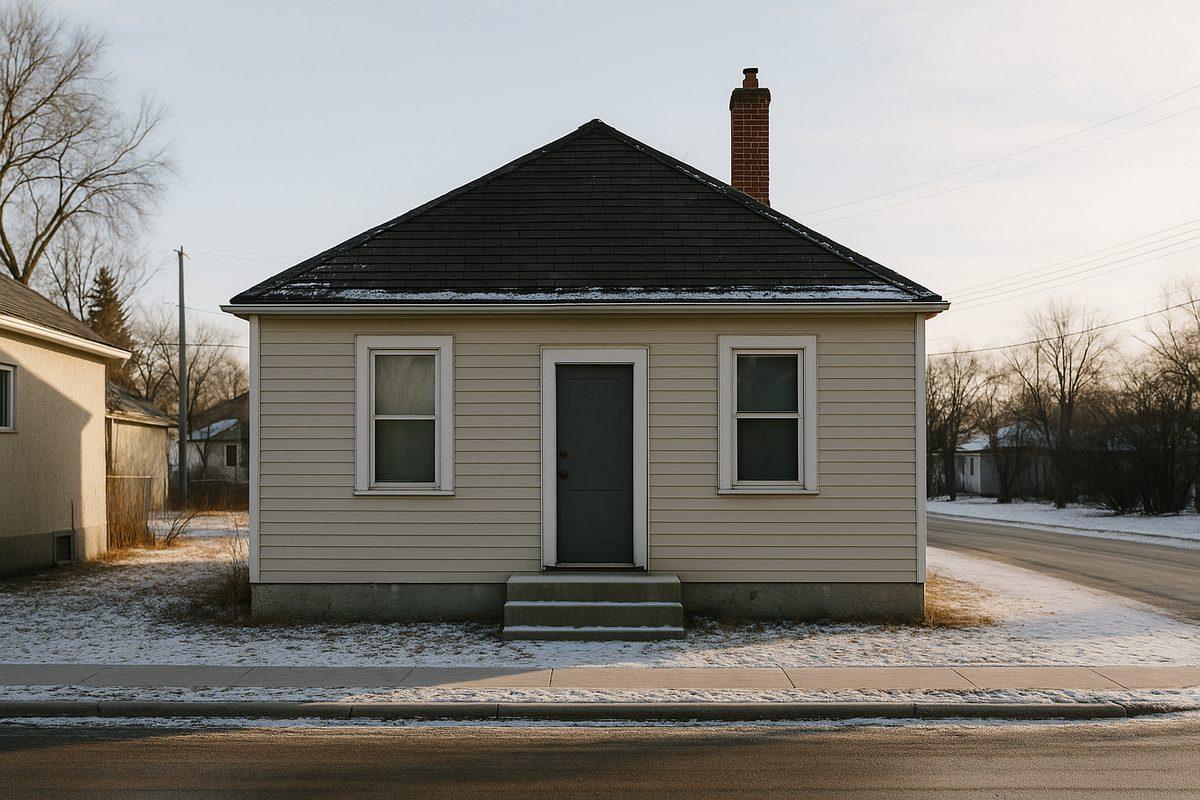
Foundation Repair in Transcona
A railway town from 1908, on the flat eastern edge of the Red River valley.
Transcona was created by the railway. In 1908 the Grand Trunk Pacific and National Transcontinental Railways settled on a site out past the eastern city limits to build their repair shops, and a town grew around the work. The name combines “Transcontinental” with “Strathcona,” after Lord Strathcona.
Winnipeg Foundation Experts works across the district, and the drainage picture here is the most consistent in our service area.
The Ground Is the Whole Story
Transcona sits on the eastern edge of the Red River valley, a glacial lake bed that is among the flattest terrain in North America. Beneath it are tens of metres of glacilacustrine clay left by Lake Agassiz.
Flat ground plus dense clay means water has no gravity path and no permeable route. It sits. That is why sump pumps in this part of the city work harder than they do almost anywhere else, and why the pump rather than the wall is often the thing that determines whether a basement stays dry.
The clay also expands and contracts with moisture, pressing on foundation walls and shifting drain lines over the years.
Houses Without Weeping Tile
Many of the older houses here were built before modern drainage practice and have no weeping tile whatsoever. There is no collection layer at footing level at all, and the sump pit is doing the entire job on its own.
That is worth knowing before something fails, because it changes what a pump failure means. On a house with functioning tile, a dead pump means water backs up in the system. On a house without it, a dead pump means water goes to the floor.
A Century of Building
Residential construction started around 1915, on narrow lots, with everything from larger three-storey buildings to small slope-roofed cottages. Transcona was incorporated as a town on 6 April 1912, and the CNR Transcona Shops opened on 18 January 1913. By 1916 it was the second-largest town in Manitoba.
The town went through severe hardship in the 1920s and 1930s, including municipal bankruptcy in 1921, and very little was built until after the war.
Then it grew fast. The population rose 71.4 percent between 1956 and 1961, from 8,312 to 14,248, and the suburban expansion of that period produced much of today’s housing. Transcona reached city status in 1961 at around 13,000 people and amalgamated into Winnipeg on 1 January 1972.
Canterbury Park, Lakeside Meadows and Mission Gardens are the newer subdivisions on the eastern and northwestern edges.
Around the District
Regent Avenue is the main commercial corridor. The Transcona Historical Museum sits at 141 Regent Avenue West in a 1925 building that was originally the Bank of Toronto and later the municipal office. CN Steam Locomotive #2747, the first steam locomotive built in Western Canada, was completed at the Transcona Shops in 1926 and stands in Rotary Heritage Park at 735 Kildare Avenue West.
We work throughout Regent, Kildare-Redonda, Kern Park, Melrose and Radisson. The assessment is free. Common work here: sump pump installation and sump pump repair, weeping tile installation where there has never been any, and wet basement repair.
Neighbourhoods We Serve in Transcona
- Regent
- Kildare-Redonda
- Kern Park
- Melrose
- Radisson
- Canterbury Park
- Mission Gardens
- Transcona South
Our Services in Transcona
- Foundation Inspection in Transcona
- Foundation Crack Repair in Transcona
- Basement Waterproofing in Transcona
- Sump Pump Installation in Transcona
- Sump Pump Repair & Replacement in Transcona
- Weeping Tile Installation in Transcona
- Egress Window Installation in Transcona
- Foundation Piling & Underpinning in Transcona
- Bowing & Bulging Wall Repair in Transcona
- House Leveling & Settlement in Transcona
- Wet Basement & Leak Repair in Transcona
- Parging & Foundation Resurfacing in Transcona
- Concrete Repair in Transcona
- Window Wells in Transcona
- Crawl Space Repair in Transcona
- Basement Lowering in Transcona
Foundation Questions from Transcona Homeowners
Why do so many Transcona homes rely on a sump pump?
Because the ground here gives water nowhere else to go. Transcona sits on the eastern edge of the Red River valley, which is exceptionally flat, over tens of metres of glacial lake clay. Water does not drain away laterally through that clay at any useful speed, so it has to be collected and pumped. Many older homes here were built before modern drainage standards and have no weeping tile at all, which puts the entire job on the pump.
How old is the housing here?
It spans a century. Original residential construction dates from around 1915, on narrow lots, ranging from larger three-storey buildings down to small slope-roofed cottages. Then the town's population surged 71.4 percent between 1956 and 1961, from 8,312 to 14,248, and the suburban expansion that came with it produced most of the housing stock. Newer subdivisions in Canterbury Park, Lakeside Meadows and Mission Gardens are more recent again.
My sump pump runs constantly in spring. Is that normal here?
More normal than we would like. On flat clay with a high spring water table, a pump can genuinely have that much work to do. What is not normal is a pump running constantly in dry weather, which usually points to a discharge line returning water to the pit or a pit that is too small.
How often should I be replacing a sump pump?
Plan for around seven to ten years, and replace it before it fails rather than after. On a flat lot with heavy clay and no weeping tile, that pump is the only thing standing between the water table and your basement floor, so it is not a component to run to failure.
Serving Transcona and Nearby
Foundation repair and basement waterproofing across Transcona. Book a free assessment and get a written scope before any work starts.