
Foundation Repair in St. Vital
Land between two rivers, with four distinct build eras and the 1950 flood in its history.
St. Vital sits between the Red River on the west and the Seine on the east, which gives it a water table that most of Winnipeg Foundation Experts’ service area does not have to think about as constantly. It is also one of the most varied districts in the city for foundation age, with roughly a century separating its oldest and newest housing.
Four Build Eras, Four Sets of Problems
The river-lot heritage homes near Kingston Crescent, Elm Park and St. Mary’s Road are the oldest, running from the 1910s to the 1950s. These are typically one-and-a-half or two storey, on stone or early poured-concrete foundations. Glenwood in the north is among the oldest neighbourhoods in the district.
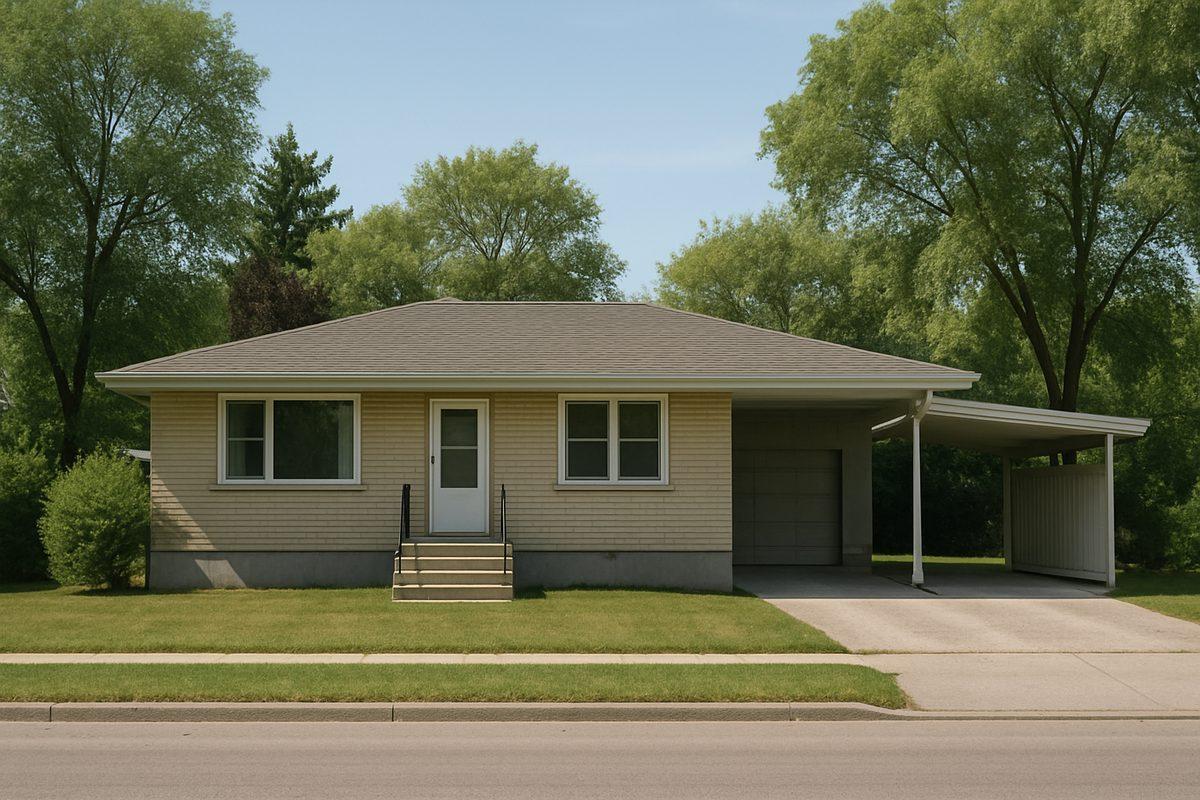
The post-war belt through central St. Vital, around Dakota Street, Chrysler Avenue and Minnetonka Drive, was built roughly 1955 to 1975. Bungalows and side-splits on poured concrete or block. This is the largest share of the housing and the source of most of our calls here.
Island Lakes is a 580-acre subdivision that began in 1981, with 150 homes finished by 1985 and another 880 between 1986 and 1990. Royalwood and Normand Park followed a similar late-century pattern.
Sage Creek and south Normand Park are recent construction, and foundation calls there are rare and usually drainage-related rather than structural.
Between Two Rivers
Being bounded by the Red and the Seine is the defining physical fact about this district. Both raise the water table on the ground near them, and both contribute to how long clay stays saturated after a wet spring.
The clay itself is the Red River gumbo found across the city, expanding as it takes on water and shrinking as it dries. What changes here is how much water is available to it and for how long.
What 1950 Tells You
The 1950 Red River flood put the entire developed area of St. Vital under water. Elm Park was among the worst affected, and roughly 20,000 St. Vital residents were evacuated as part of a citywide displacement approaching 100,000 people.
Flood protection has changed substantially since. What has not changed is the elevation and the drainage character of the land, and in a high-water year the groundwater rises across the district regardless of what reaches the surface.
Trees and Older Service Lines
The mature elms and oaks through the older parts of St. Vital are part of the district’s character and part of its foundation picture. A large tree pulls a great deal of moisture from clay soil through a dry summer, and the clay contracts as it goes.
The same root systems are known here for finding clay-tile sewer lines in older houses. When we assess a foundation in Glenwood or near Kingston Crescent, the tree cover is something we look at rather than something we ignore.
We work across the whole district, from the heritage stock near the river to the newer subdivisions in the south. The assessment is free. Common work here: basement waterproofing, sump pump installation on the flat post-war lots, and foundation crack repair.
Neighbourhoods We Serve in St. Vital
- Glenwood
- Kingston Crescent
- Elm Park
- Norberry
- Island Lakes
- Royalwood
- Sage Creek
- Normand Park
Our Services in St. Vital
- Foundation Inspection in St. Vital
- Foundation Crack Repair in St. Vital
- Basement Waterproofing in St. Vital
- Sump Pump Installation in St. Vital
- Sump Pump Repair & Replacement in St. Vital
- Weeping Tile Installation in St. Vital
- Egress Window Installation in St. Vital
- Foundation Piling & Underpinning in St. Vital
- Bowing & Bulging Wall Repair in St. Vital
- House Leveling & Settlement in St. Vital
- Wet Basement & Leak Repair in St. Vital
- Parging & Foundation Resurfacing in St. Vital
- Concrete Repair in St. Vital
- Window Wells in St. Vital
- Crawl Space Repair in St. Vital
- Basement Lowering in St. Vital
Foundation Questions from St. Vital Homeowners
Why is St. Vital's housing so mixed in age?
Because it was built out in four separate waves rather than one. The river-lot heritage homes near Kingston Crescent and St. Mary's Road date from the 1910s to the 1950s. Central St. Vital around Dakota Street and Minnetonka Drive is post-war, roughly 1955 to 1975. Island Lakes and Royalwood came in from the mid-1980s, and Sage Creek is recent. Each era brought different foundation construction, so the right approach varies street to street.
Does the 1950 flood still matter for foundations today?
Not directly, but it tells you something about the ground. The entire developed area of St. Vital flooded in 1950, with Elm Park hit particularly hard and around 20,000 residents evacuated. Land that floods is low-lying land with a high water table, and that condition did not change when the water went down.
I have mature elms near the house. Is that a problem?
It can be. Large trees draw significant moisture out of clay through a dry summer, and clay that loses moisture shrinks away from footings. The mature elms and oaks in the older parts of St. Vital are also known for working into clay-tile sewer lines, which is a related symptom of the same root reach.
My house is a 1960s bungalow. What should I be watching?
The drainage first. Post-war bungalows here were built with poured concrete or block foundations and drainage to the standard of the day, which is often at the end of its service life now. Cast-iron drain stacks from that era are also reaching the end of theirs. Neither is urgent on its own, but both are worth knowing about before they announce themselves.
Serving St. Vital and Nearby
Foundation repair and basement waterproofing across St. Vital. Book a free assessment and get a written scope before any work starts.