
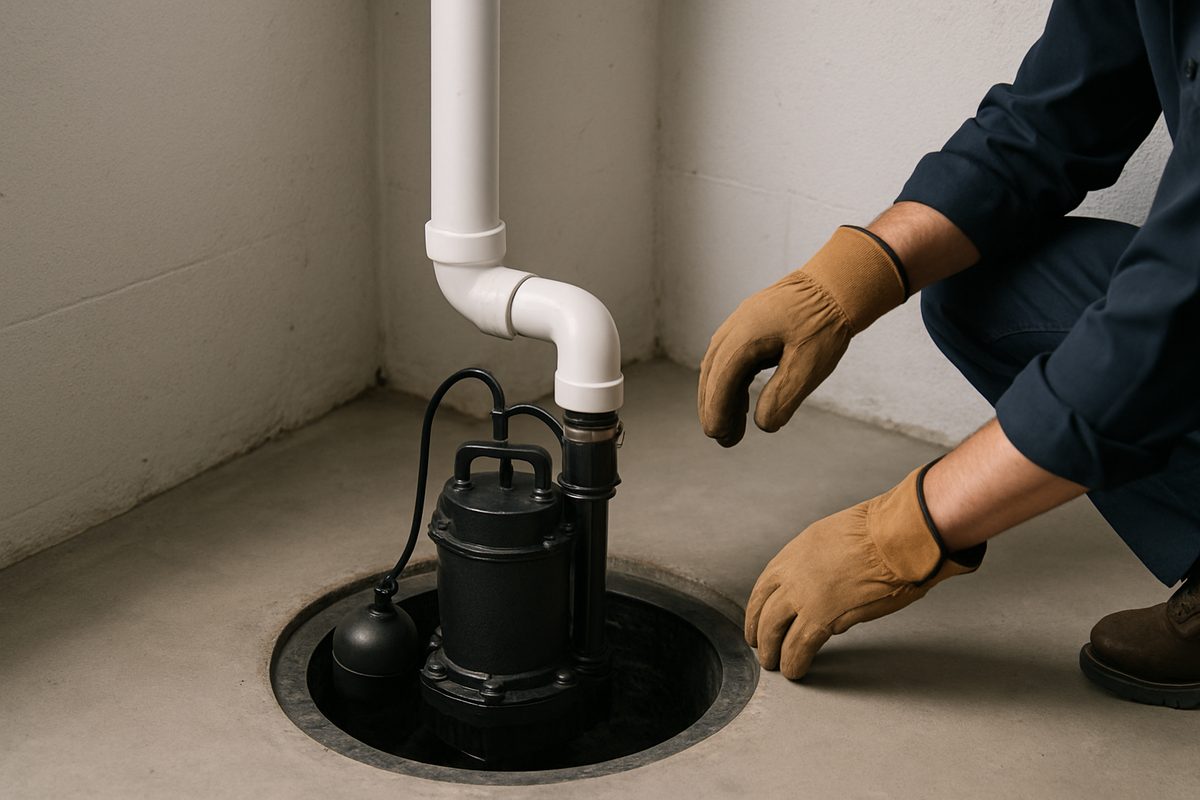
Sump Pump Installation in Winnipeg
A pump is only as good as the pit it sits in and the discharge line it feeds.
A sump pump is the last stage in a drainage system, not a standalone fix. Water arrives at the weeping tile, the tile carries it to the pit, and the pump lifts it away from the house. Winnipeg Foundation Experts installs the pit and pump as part of that chain, because a pump doing its job in a system that is failing upstream will not keep a basement dry.
Getting the Pit Right
The pit does more work than people expect. It has to sit low enough that your weeping tile drains into it rather than backing up, and it has to hold enough volume that the pump runs in reasonable cycles instead of switching on and off every thirty seconds.
Short cycling is the most common reason a pump fails years before it should. Each start is the hardest moment in a pump’s life, and a pit that is too small multiplies those starts. We cut and form the pit to suit the water volume the house actually produces.
Sizing and Discharge
An oversized pump is not a safer choice. It empties the pit faster than the tile refills it, which produces exactly the short-cycling problem a good pit is meant to avoid. We size the pump to the volume, not to the biggest unit on the shelf.
The discharge line matters just as much. It needs to carry water far enough from the foundation that it does not simply soak back down to the weeping tile and return to the pit. We have seen pumps running almost continuously purely because the discharge was dumping two feet from the wall.
Backup for the Storms That Matter
Prairie summer storms bring heavy rain and take down power, often in the same hour. A primary pump with no backup is offline exactly when the water is arriving fastest.
A battery backup runs the pit through an outage. On a finished basement, or a house with a history of water, it is usually the difference between a wet floor and a dry one.
We look at the whole path the water takes before recommending a pump, and the assessment is free. Related work: weeping tile installation if the tile feeding the pit has failed, sump pump repair when the existing unit is the problem, and basement waterproofing when water is coming through the wall rather than under it. We work across East Kildonan and St. James, where post-war housing and flat ground make pumps standard equipment.
What's Included
- New sump pits cut and formed to proper depth
- Submersible pump sizing matched to the water volume
- Discharge routed well away from the foundation
- Battery backup options for power outages during storms
- Written scope before work starts
Other Services We Offer in Winnipeg
Sump Pump Installation Questions
Does every Winnipeg house need a sump pump?
Not every one, but a great many do. Homes with weeping tile need somewhere for that water to go, and on flat lots with heavy clay a pump is usually the only way to move it. Older houses built before modern drainage standards sometimes have no weeping tile at all and rely on the pump entirely.
How deep does a sump pit need to be?
Deep enough that the pump switches on below the level of your slab and the weeping tile can drain into it freely. A pit that is too shallow means the pump runs constantly on a short cycle, which is how pumps die early.
Where should the discharge go?
Well away from the house, and never into your weeping tile or sanitary sewer. A discharge that dumps beside the foundation sends the same water straight back down to the pit, so the pump runs continuously and the soil against your wall stays saturated.
Is a battery backup worth it?
It depends on your exposure. The storms most likely to overwhelm a basement are also the ones most likely to take the power out, and a pump without electricity is just a hole in the floor. If your basement is finished or you have had water before, a backup earns its cost the first time it runs.
Get a Free Sump Pump Installation Quote
Book a free assessment. We will tell you what is moving, why, and whether it needs work now.